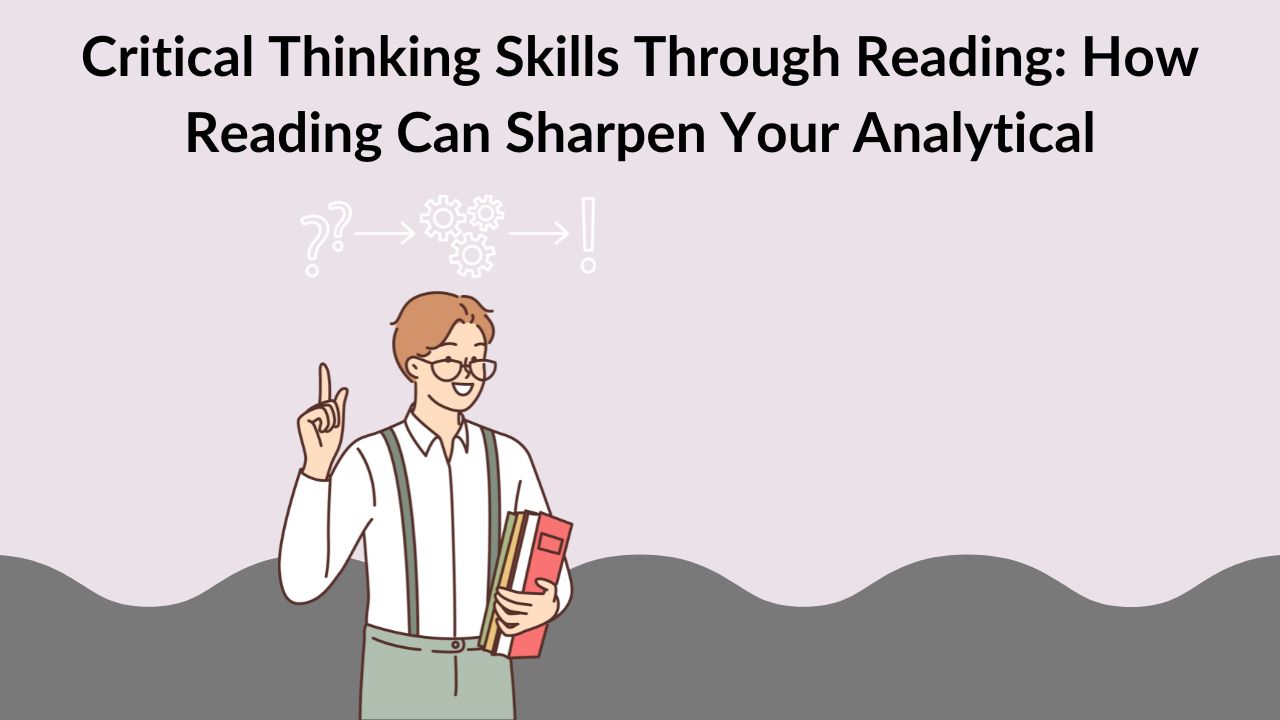
Critical Thinking Skills Through Reading: How Reading Can Sharpen Your Analytical
Have you ever been completely engrossed in a book, losing track of time as the words on the page transport you to another world? I know I have. As a lifelong reader, I’ve experienced firsthand the power of literature to ignite the imagination and evoke emotions. But what if I told you that reading can do more than entertain and inspire? It can actually sharpen your critical thinking skills and improve your analytical abilities.
Critical thinking is a crucial skill for navigating the complexities of life. It enables us to solve problems, make informed decisions, and analyze information effectively. And reading, as it turns out, is a remarkably effective way to cultivate and enhance these vital skills.
When we read, we engage our minds in active and reflective thinking processes. Reading comprehension, the ability to understand and analyze complex texts, is a key component of critical thinking. By delving into the nuances of a story, we exercise our analytical thinking muscles. We break down information, identify patterns, and make connections. We develop the cognitive skills of attention, memory, and reasoning.
Key Takeaways:
- Reading can enhance critical thinking skills by engaging the mind in active and reflective thinking processes.
- Reading comprehension is a key component of critical thinking, as it requires understanding and analyzing complex texts.
- Analytical thinking involves breaking down information, identifying patterns, and making connections.
- Cognitive skills, such as attention, memory, and reasoning, can be improved through reading.
- Embrace the power of reading to sharpen your critical thinking skills and open up new possibilities for personal growth and success.
Unveiling the Power of Literary Exploration for Cognitive Skills Development
Reading fiction not only offers an escape into imaginative worlds but also serves as a powerful tool for the development of cognitive skills. Through engaging with fictional narratives, readers can enhance their memory, attention, problem-solving, and logical reasoning abilities.
Strengthening Logical Reasoning with Fiction
One of the key benefits of reading fiction is the opportunity it provides to exercise logical reasoning skills. Fictional stories often present complex plots and intricate character motivations, requiring readers to piece together information, identify patterns, and draw conclusions. By engaging in these mental exercises, readers can sharpen their logical reasoning abilities and apply them to real-world situations.
The Science Behind Reading and Improved Management Skills
Reading fiction not only stimulates the imagination but also activates different areas of the brain associated with cognitive processes and emotional responses. These cognitive processes, when honed through reading, can have a positive impact on management skills. Understanding and analyzing interpersonal relationships and dynamics within fictional narratives can enhance readers’ ability to navigate complex social scenarios and make informed decisions as effective managers.
Reading as a Gateway to Planning and Strategy Formulation
Engaging with a wide range of fictional stories exposes readers to different perspectives and scenarios, laying the foundation for planning and strategy formulation. By immersing themselves in diverse narrative worlds, readers are encouraged to think critically, employ creative problem-solving strategies, and consider alternative viewpoints. This exposure to varied perspectives enables readers to develop a more comprehensive approach to planning and strategy formulation in their personal and professional lives.
| Cognitive Skills Developed through Reading Fiction | Benefits |
|---|---|
| Memory | Enhanced ability to recall and retain information |
| Attention | Improved focus and concentration |
| Problem-solving | Enhanced ability to analyze and solve complex problems |
| Logical reasoning | Sharper skills in identifying patterns and making connections |
Enhancing Information Processing: The Synergy of Analytical Reading Strategies and Critical Thinking Exercises
Analytical reading strategies play a crucial role in improving information processing skills. By employing techniques such as annotating, summarizing, and asking questions, readers can actively engage with texts and enhance their ability to process and understand information more effectively.
Critical thinking exercises further enhance analytical reading strategies. By evaluating arguments, solving logical puzzles, and engaging in thoughtful analysis, readers can sharpen their critical thinking skills and deepen their understanding of the information they encounter.
The synergy between analytical reading strategies and critical thinking exercises produces a more comprehensive and efficient approach to information processing. By utilizing these strategies and techniques in tandem, readers can develop a deeper understanding of complex texts and extract valuable insights from the information presented.
This combination of analytical reading strategies and critical thinking exercises provides readers with the tools they need to critically analyze information, make informed decisions, and develop well-rounded cognitive abilities.
| Analytical Reading Strategies | Critical Thinking Exercises |
|---|---|
| Annotating the text to highlight important information and make connections | Evaluating arguments to identify logical fallacies and biases |
| Summarizing the main points and key ideas of the text | Solving logical puzzles to enhance problem-solving skills |
| Asking questions to deepen understanding and promote critical thinking | Examining evidence and evaluating its validity |
Critical Thinking Skills Through Reading: Bridging the Gap Between Literature Analysis and Real-World Application
When it comes to developing critical thinking skills, literature analysis plays a vital role. By immersing ourselves in the stories we read, we are presented with opportunities to dissect characters, analyze their motivations, and interpret plot developments. This process fosters analytical skills that can be applied to real-world scenarios, allowing us to make informed decisions, solve problems, and navigate complex societal issues.
Fostering Analytical Skills through Character and Plot Dissection
By critically examining the traits, actions, and choices of literary characters, readers learn to analyze and interpret human behavior. Engaging with complex characters allows us to question their motivations, understand their perspectives, and evaluate their actions. This process not only enhances our analytical skills but also encourages empathy and a deeper understanding of the diverse range of individuals in the real world.
Empowering Predictive Thinking by Guessing the Ending
When we read a story, our minds naturally start to predict and anticipate what will happen next. Guessing the ending of a book or a short story nurtures our predictive thinking abilities. We learn to analyze the evidence and clues presented in the text, weigh different possibilities, and make educated guesses about the outcome. This exercise in predictive thinking extends beyond the realm of fiction, empowering us to anticipate outcomes and make informed decisions in real-world situations.
Cultivating Inquisitiveness and Perspective through Intertextuality
Intertextuality refers to the interconnection of different texts, allowing us to explore references, allusions, and interconnected narratives. By engaging with intertextual works, readers are encouraged to be inquisitive and curious, uncovering connections and gaining multiple perspectives. This cultivates a broader mindset, fostering creativity and critical thinking as we seek to understand the complexities of the world around us.
By bridging the gap between literature analysis and real-world application, reading becomes a powerful tool for developing critical thinking skills that extend far beyond the confines of the page. The abilities we acquire through character dissection, predictive thinking, and intertextuality enable us to approach everyday situations with a heightened sense of analysis, creativity, and inquisitiveness. So, immerse yourself in the world of literature, and unlock the full potential of your critical thinking skills.
FAQ
How can reading enhance critical thinking skills?
Reading can enhance critical thinking skills by engaging the mind in active and reflective thinking processes, requiring understanding and analyzing complex texts.
What is the relationship between analytical thinking and reading?
Analytical thinking involves breaking down information, identifying patterns, and making connections, which can be developed through reading.
How do cognitive skills improve through reading?
Reading improves cognitive skills such as attention, memory, and reasoning by activating different areas of the brain associated with cognitive processes.
Can reading fiction improve cognitive skills?
Yes, reading fiction can improve cognitive skills such as memory, attention, and problem-solving by engaging readers in logical reasoning exercises through complex plots and character motivations.
How does reading fiction contribute to management skills?
Reading fiction requires understanding and analyzing interpersonal relationships and dynamics, which can enhance management skills.
What are some analytical reading strategies that can improve information processing skills?
Analytical reading strategies such as annotating, summarizing, and asking questions can improve information processing skills.
How do critical thinking exercises enhance analytical reading strategies?
Critical thinking exercises, such as evaluating arguments and solving logical puzzles, can enhance analytical reading strategies and improve information processing.
How can literature analysis cultivate analytical skills?
Literature analysis cultivates analytical skills by encouraging readers to dissect characters, analyze their motivations, and interpret plot developments.
How does guessing the ending of a story foster predictive thinking?
Guessing the ending of a story fosters predictive thinking by encouraging readers to anticipate outcomes based on evidence and clues within the text.
What is the significance of intertextuality in reading for critical thinking?
Intertextuality allows readers to cultivate inquisitiveness and gain multiple perspectives by exploring references and allusions, fostering critical thinking.
How can critical thinking skills developed through reading be applied to real-world situations?
Critical thinking skills developed through reading can be applied to real-world situations such as problem-solving, decision-making, and understanding complex societal issues.
Source Links: