Questioning the Text: Fostering Active Reading Habits
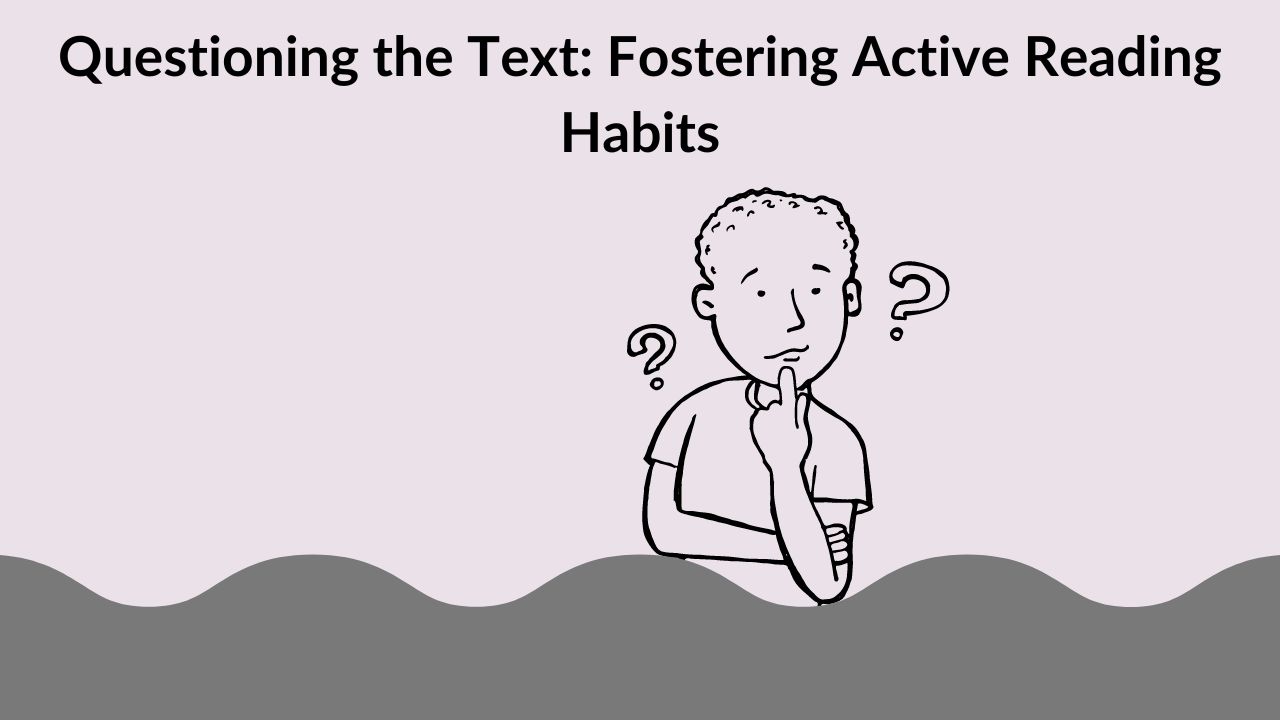
Did you know that engaging in questioning while reading can significantly enhance your reading experience? When readers actively question the text, they foster critical thinking skills and develop a deeper understanding of the material. This simple yet powerful strategy can transform passive readers into active participants, fostering reading engagement like never before.
Key Takeaways:
- Questioning the text is a key strategy for fostering active reading habits.
- By asking questions before, during, and after reading, readers actively interact with the material.
- Questioning promotes critical thinking skills and deeper understanding.
- Active reading habits lead to increased reading engagement.
- Engaging with the text through questioning enhances the overall reading experience.
The Importance of Active Reading for Comprehensive Understanding
Active reading is a crucial practice that allows readers to develop a comprehensive understanding of the text they are engaging with. By actively interacting with the material, readers can enhance their reading experience and deepen their comprehension of the content.
Defining Active vs. Passive Reading
Active reading involves actively engaging with the text, employing strategies that promote deeper comprehension and critical thinking. It goes beyond simply decoding words and involves an active effort to understand the meaning and context of the text. In contrast, passive reading is a more passive approach, where readers simply consume the text without actively processing and analyzing it.
The Many Benefits of Active Reading Strategies
Active reading strategies offer numerous benefits that contribute to a more comprehensive understanding of the text. These strategies include:
- Improved learning retention: Active engagement with the text helps readers retain information better, making it easier to recall key details and concepts.
- Increased reading fluency: By actively reading, readers develop a smoother and more fluent reading style.
- Enhanced vocabulary: Active reading allows readers to encounter new words in context, facilitating vocabulary development.
- Critical thinking skills: Active reading promotes critical thinking by encouraging readers to analyze, evaluate, and interpret the text.
Improving Learning Retention Through Active Engagement
Active reading encourages readers to actively engage with the text, which can significantly improve learning retention. By actively processing and interacting with the material, readers are more likely to remember and internalize the information they encounter. This leads to a more comprehensive understanding of the text and promotes long-term learning.
How Active Reading Prepares Children for Academic Success and Beyond
Active reading is a foundational skill that prepares children for academic success and equips them with lifelong learning skills. By engaging actively with the text, children develop the ability to comprehend complex ideas, think critically, and communicate effectively. These skills not only benefit their academic performance but also positively impact their professional and personal lives.
| Benefits of Active Reading Strategies |
|---|
| Improved learning retention |
| Increased reading fluency |
| Enhanced vocabulary |
| Critical thinking skills |
Questioning the Text and Other Critical Reading Strategies
In this section, we will explore the practice of questioning the text as a critical reading strategy. By employing various questioning techniques, readers can engage with the text on a deeper level and enhance their critical thinking skills. One effective approach is to ask different types of questions, including literal, interpretive, and inferential questions. Literal questions focus on facts and information directly stated in the text, while interpretive questions require readers to analyze and draw inferences based on their understanding. Inferential questions go beyond the text and encourage readers to make connections and consider alternative perspectives.
Alongside questioning, there are other critical reading strategies that complement and reinforce this process. Making connections is an effective technique that involves relating the text to personal experiences, other texts, and the wider world. By forging these connections, readers can enhance their understanding and make the text more relevant and meaningful to their own lives.
Visualizing is another valuable strategy that aids in comprehension. By creating mental images of the text, readers can better visualize the events, settings, and characters, facilitating a deeper understanding and engagement with the material. Summarizing is another critical reading strategy that involves condensing the main ideas and key details of the text into a concise summary. This process helps readers consolidate their understanding and identify the most important elements of the text.
Lastly, making predictions is a powerful strategy that encourages readers to anticipate what may happen next in the text. This not only enhances engagement but also fosters critical thinking skills as readers consider the evidence and clues provided by the text to make educated guesses about future events.
By incorporating these critical reading strategies, such as questioning, making connections, visualizing, summarizing, and making predictions, readers can sharpen their critical thinking skills, deepen their comprehension of the text, and become more active and engaged readers.
Connecting with the Text: Building Bridges to Deeper Comprehension
Connecting with the text is a powerful way to deepen comprehension and engage with the material on a personal level. By establishing connections, readers can form meaningful associations that enhance their understanding and immersion in the text. This section will explore different types of text connections, including text-to-self, text-to-text, and text-to-world connections, as well as the coding strategy and connection stems that aid in this process. Additionally, we will delve into the importance of tapping into personal experiences to make the text more relevant and meaningful.
Text-to-Self, Text-to-Text, and Text-to-World Connections
Text-to-self connections refer to the connections readers make between the text and their own lives, experiences, and emotions. These connections allow readers to relate to the characters, situations, and themes in the text. By drawing upon their personal experiences, readers can better understand the text and make it more relatable.
Text-to-text connections involve establishing links between the current text and other texts readers have encountered before. These connections can be based on similarities in themes, characters, settings, or writing styles. By making connections to other texts, readers deepen their understanding and gain new insights.
Text-to-world connections extend beyond the text itself and relate it to real-world events, issues, or knowledge. By connecting the text to the broader context, readers develop a more comprehensive understanding and see the relevance and applicability of the text in their own lives.
Coding Strategy and Connection Stems: Tools to Enhance Engagement
The coding strategy is a technique where readers use symbols or annotations to mark their reactions, thoughts, and understanding of the text as they read. By visually representing their engagement and reflections, readers can actively process the content and increase their comprehension. These symbols can include underlining important passages, highlighting key ideas, drawing arrows for connections, or using asterisks for surprising or impactful moments.
| Symbol | Meaning |
|---|---|
| * | Surprising or impactful moment |
| ! | Important or significant passage |
| + | New insight or idea |
| – | Confusing or unclear section |
| ? | Question or something to explore further |
Connection stems are prompts or sentence starters that encourage readers to actively engage with the text and make deeper connections. These stems can be used as a guide to initiate thoughts and discussions about the text. For example:
- This reminds me of…
- I wonder why…
- I can relate to this because…
- This connects to…
- I disagree with this because…
Tapping into Personal Experiences for Textual Relevance
Personal experiences play a crucial role in connecting with the text on a deeper level. By drawing upon their own experiences, readers can make the content more relevant and meaningful to their lives. Reflecting on personal experiences allows readers to empathize with characters, understand different perspectives, and gain a richer understanding of the themes and messages conveyed in the text.
Techniques for Developing Critical Literacy Among Young Readers
Utilizing Predictive Methods to Anticipate Text Direction
One effective technique for developing critical literacy among young readers is the utilization of predictive methods to anticipate the direction of the text. By encouraging children to make predictions and set reading goals, they actively engage with the material and enhance their comprehension. Predictive methods also promote analytical thinking, as readers constantly evaluate their predictions based on the information presented in the text. Ultimately, this technique encourages a proactive approach to reading and fosters the development of critical literacy skills.
Visualizing Content for Retention and Enjoyment
Another valuable technique for developing critical literacy is visualizing content while reading. By creating mental images based on the text, young readers enhance their retention and enjoyment of the material. Visualizing helps to bring the text to life, making it more engaging and memorable. Additionally, this technique encourages readers to use their imagination and connect with the story on a deeper level. By incorporating visualization into their reading practice, young readers strengthen their critical literacy skills and develop a greater appreciation for literature.
Questioning as a Means to Fuel Curiosity and Comprehension
Questioning is a powerful tool for fueling curiosity and enhancing comprehension among young readers. Encouraging children to ask questions about the text before, during, and after reading promotes active engagement and critical thinking. By stimulating curiosity through questioning, readers are motivated to seek answers within the text, develop a deeper understanding, and extract meaning. This technique helps to cultivate a sense of inquiry and encourages young readers to approach texts with a critical mindset.
The Role of Summarizing in Consolidating Textual Understanding
Summarizing plays a vital role in consolidating textual understanding and developing critical literacy skills. By summarizing the main ideas and key points of the text, young readers demonstrate their comprehension and analytical abilities. Summarizing not only helps to consolidate knowledge but also allows readers to identify the most important information in a text. This technique encourages critical thinking, as readers must prioritize and synthesize information to create concise summaries. By incorporating summarizing into their reading practice, young learners develop a deeper understanding of texts and enhance their critical literacy skills.
By implementing these techniques – utilizing predictive methods, visualizing content, questioning, and summarizing – young readers can develop critical literacy skills, engage more actively with the text, and foster a lifelong love for reading.
FAQ
What is the importance of questioning the text in fostering active reading habits?
Questioning the text is a key strategy in promoting deeper engagement with the material and developing critical thinking skills. By asking questions before, during, and after reading, readers actively interact with the text, leading to a more comprehensive understanding.
What is active reading and how does it differ from passive reading?
Active reading is a practice that involves actively engaging with the text, such as by asking questions, making connections, visualizing, summarizing, and making predictions. It promotes better learning retention, increased reading fluency, enhanced vocabulary, and critical thinking skills, unlike passive reading, which involves reading without active interaction or engagement.
How does active reading contribute to academic success and lifelong learning skills?
Active reading prepares children for academic success by enhancing their comprehension and analytical skills. It equips them with lifelong learning skills, such as critical thinking and improved learning retention, which are essential for academic and professional growth.
What are some questioning techniques and other critical reading strategies?
Questioning techniques include asking literal, interpretive, and inferential questions. Critical reading strategies that complement questioning include making connections, visualizing, summarizing, and making predictions. These strategies enhance comprehension and analytical skills by encouraging deep engagement with the text.
How can connecting with the text deepen comprehension and engagement?
Connecting with the text allows readers to relate to the material on a personal level. Text-to-self, text-to-text, and text-to-world connections help readers make meaningful associations and understand the text’s relevance to their own experiences and the world around them.
What are some tools to enhance engagement when connecting with the text?
The coding strategy, where readers use symbols to mark their reactions and understanding of the text, and connection stems, which provide prompts for deeper engagement, are tools that can enhance engagement when connecting with the text. These tools encourage readers to actively interact with the material.
How can critical literacy be developed among young readers?
Critical literacy can be developed by utilizing predictive methods to anticipate text direction, such as making predictions and setting reading goals. Visualizing content can enhance retention and enjoyment of the text. Questioning can fuel curiosity and enhance comprehension, while summarizing consolidates textual understanding.
Source Links: