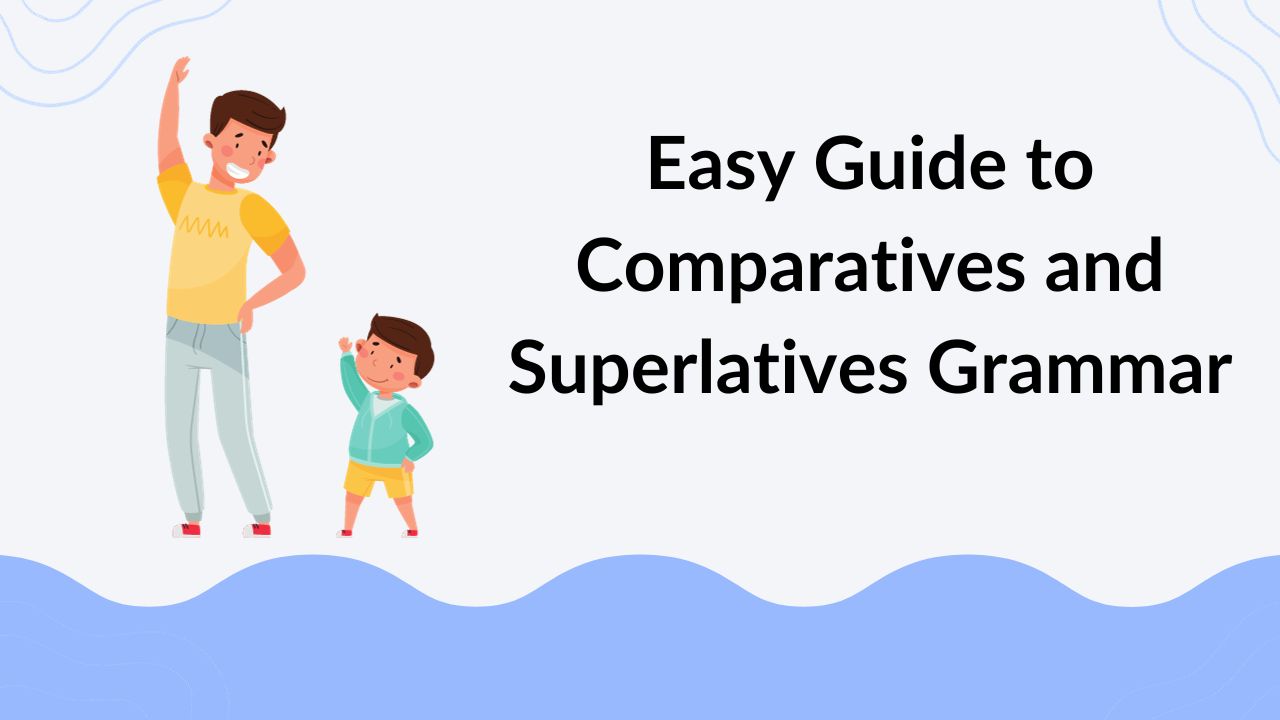
Easy Guide to Comparatives and Superlatives Grammar
Are you struggling with understanding Comparatives and Superlatives Grammar? Fear not, as we have put together an easy guide to help you master the rules and usage of these grammar concepts. Whether you’re a beginner or looking to enhance your language skills, this guide will provide you with the necessary information to use comparatives and superlatives efficiently.
Key Takeaways:
- Comparatives and superlatives are important concepts in English grammar.
- This guide will help you understand and use comparatives and superlatives efficiently.
- Whether you’re a beginner or looking to enhance your language skills, this guide will provide you with the necessary information to master these grammar concepts.
- You will learn how to properly form and use comparatives and superlatives.
- By the end of this guide, you will have a better understanding of the exceptions and irregularities that exist within the rules of comparatives and superlatives.
What are Comparatives and Superlatives Grammar?
Comparatives and Superlatives Grammar are essential elements of English grammar that help us make comparisons and express degrees of difference between two or more things.
A comparative is a form of an adjective that compares two things, while a superlative is a form of an adjective that compares three or more things and expresses the highest or lowest degree of a quality.
For example, the comparative form of the adjective “tall” is “taller,” and the superlative form is “tallest.” We use comparatives and superlatives to construct sentences like “Tom is taller than Bob” or “Jerry is the tallest among all his friends.”
In other words, comparatives help us create sentences that express degrees of difference between two things, while superlatives help us express the degree of difference among three or more things.
Forming Comparatives
Comparatives are used to show the difference between two things. To form comparatives, we typically add -er to the end of an adjective or adverb, and sometimes use the word “more” before the adjective or adverb.
For example:
| Adjective/Adverb | Comparative |
|---|---|
| Tall | Taller |
| Fast | Faster |
| Careful | More careful |
| Quickly | More quickly |
However, there are some exceptions to these rules. For example, if the adjective or adverb ends in -y, we change the -y to -i and add -er. If the adjective or adverb is a one-syllable word and ends in a consonant-vowel-consonant pattern, we double the final consonant and add -er.
For example:
| Adjective/Adverb | Comparative |
|---|---|
| Happy | Happier |
| Big | Bigger |
| Thin | Thinner |
| Fat | Fatter |
Some adjectives and adverbs have irregular comparative forms that do not follow any pattern. Here are some examples:
- Good – Better
- Bad – Worse
- Far – Farther/Further
- Well – Better
- Little – Less
It’s important to remember that comparatives are used to compare two things, not three or more. For comparisons of three or more things, we use superlatives.
Using Comparatives: Making Comparisons
Comparatives are excellent tools to indicate how one thing is better, worse, or equal to another. In a sentence, a comparative adjective or adverb seeks to compare two nouns or actions, expressing the difference between them. Here are some ways to use comparatives in a sentence:
Comparing Equality
When things are equal, we use the structure “as + adjective/adverb + as”. For example:
| Example | Meaning |
|---|---|
| She is as tall as her brother. | The height of both siblings is equal. |
| This restaurant is as good as the other one. | Both restaurants are of equal quality. |
Comparing Inequality
When things are unequal, we use the comparative form of the adjective/adverb + “than”. For example:
| Example | Meaning |
|---|---|
| He is taller than his brother. | The height of the first sibling is greater than the other. |
| This restaurant is better than the other one. | The quality of this restaurant is superior to the other. |
Comparing Superlative
When we want to indicate the highest or the lowest degree of something, we use superlative adjectives and adverbs. The structure is “the + superlative form + noun/verb” or “the + most + adverb”. For example:
| Example | Meaning |
|---|---|
| She is the tallest person in the family. | She is the person with the greatest height from all the family members. |
| This is the best pizza I have ever tasted. | This pizza has the highest quality of all the pizzas I have tasted. |
These are some basic structures for using comparatives. Keep in mind that comparative adjectives and adverbs modify the nouns or verbs they are referring to, so it is essential to use them grammatically and contextually correctly to convey the intended meaning.
Forming Superlatives
Superlatives are used to express the highest degree or the lowest degree of something. To form superlatives, we follow similar patterns to comparatives by modifying adjectives and adverbs.
Forming Superlative Adjectives
Most one-syllable adjectives and some two-syllable adjectives use the suffix “-est” to form the superlative. For example:
| Adjective | Comparative | Superlative |
|---|---|---|
| big | bigger | biggest |
| fast | faster | fastest |
| thin | thinner | thinnest |
However, some two-syllable adjectives use “most” or “least” to form the superlative. For example:
- most beautiful
- least interesting
Irregular adjectives such as “good” and “bad” have unique superlative forms:
- good – best
- bad – worst
Forming Superlative Adverbs
Similar to comparative adverbs, we use “most” or “least” to form superlative adverbs. For example:
- most quickly
- least often
Some adverbs also use “-est” to form the superlative, such as:
- soon – soonest
- late – latest
Remember to pay attention to the spelling of the adverb before adding “-est”.
Using Superlatives: Expressing Extremes
Superlatives are used to express the highest or lowest degree of something. They are often used to compare multiple items or attribute a quality to a single item.
When using superlatives, there are a few common structures to keep in mind. The most common structure is:
the + superlative adjective + (noun) + in/ of + (group)
For example:
| Superlative Form | Example Sentence |
|---|---|
| Adjective | Jack is the tallest person in the room. |
| Adverb | Susan writes the most eloquently of all her colleagues. |
| Noun | The Great Wall of China is the longest wall in the world. |
In some cases, superlative forms may be irregular or have exceptions to the standard rules. For example:
- The superlative form of “good” is “best”.
- The superlative form of “bad” is “worst”.
- The superlative form of “far” is “farthest” or “furthest”.
It’s important to note that superlatives can be overused, so it’s important to use them sparingly and appropriately. Superlatives can be effective when used to highlight a standout feature or to emphasize a point, but using superlatives too frequently can reduce their impact.
Comparative and Superlative Adjectives
Adjectives are words that describe or modify nouns or pronouns. They can be used in their positive form, like “big,” or they can be modified into comparative or superlative forms to express degrees of comparison.
Comparative Adjectives
Comparative adjectives are used to compare two things or people. They are formed by adding “-er” to the end of the adjective, or by using “more” + the adjective. For example:
| Adjective | Comparative Form |
|---|---|
| Big | Bigger |
| Beautiful | More beautiful |
| Fast | Faster |
Comparative adjectives are often used in sentences with the word “than,” to show the difference between two things or people. For example:
- My sister is taller than my brother.
- This book is more interesting than that one.
- I swim faster than my friend.
Superlative Adjectives
Superlative adjectives are used to compare three or more things or people. They are formed by adding “-est” to the end of the adjective, or by using “most” + the adjective. For example:
| Adjective | Superlative Form |
|---|---|
| Big | Biggest |
| Beautiful | Most beautiful |
| Fast | Fastest |
Superlative adjectives are often used in sentences with the word “the,” to show the highest degree or quality of something. For example:
- Mary is the tallest girl in her class.
- The Eiffel Tower is the most famous monument in Paris.
- Usain Bolt is the fastest sprinter in the world.
It is important to note that some adjectives have irregular comparative and superlative forms. For example:
| Adjective | Comparative Form | Superlative Form |
|---|---|---|
| Good | Better | Best |
| Bad | Worse | Worst |
| Far | Further/Farther | Furthest/Farthest |
By using comparative and superlative adjectives, you can express a difference in degree between people, places, things, and ideas. With these examples, you can begin to understand the basic concepts of comparative and superlative adjectives.
Comparative and Superlative Adverbs
In addition to using comparative and superlative adjectives to describe nouns, we can also modify adverbs to compare and describe verbs, adjectives, and other adverbs. Comparative adverbs are used to show a difference in degree between two things, while superlative adverbs are used to show the highest degree of something.
Forming Comparative and Superlative Adverbs
Like comparative and superlative adjectives, we can form comparative and superlative adverbs in several ways:
| Type | Example | Comparative Form | Superlative Form |
|---|---|---|---|
| One-syllable adverbs | fast | faster | fastest |
| Adverbs ending in -ly | quickly | more quickly | most quickly |
| Adverbs that don’t end in -ly | hard | harder | hardest |
| Irregular adverbs | well | better | best |
Note that the comparative and superlative forms of some adverbs are the same as their adjective counterparts. For example, “fast” can be both an adjective and an adverb.
Using Comparative and Superlative Adverbs
Comparative adverbs are used to show a difference in degree between two things, while superlative adverbs are used to show the highest degree of something. Here are some examples:
- She runs more quickly than her brother.
- The teacher speaks more softly than the student.
- He sings better than anyone in the choir.
- This is most definitely the best pizza I’ve ever had.
- I am least interested in that topic.
As with comparative and superlative adjectives, there are also certain irregular adverbs with unique forms, such as “well” (better, best) and “badly” (worse, worst).
Learning to use comparative and superlative adverbs will help you to express yourself more precisely and effectively, adding nuance to your writing and speech.
Exceptions and Irregularities in Comparative and Superlative Grammar
While comparatives and superlatives follow specific rules and patterns, there are exceptions and irregularities that can make them more challenging to master. Here are some of the most notable examples:
Irregular Adjectives and Adverbs
Some adjectives and adverbs have irregular comparative and superlative forms that do not follow the standard rules. Here are some examples:
| Adjective/Adverb | Comparative | Superlative |
|---|---|---|
| Good | Better | Best |
| Bad | Worse | Worst |
| Far | Further | Furthest |
As you can see from the table, these irregular forms are exceptions to the standard rules for forming comparatives and superlatives.
Exceptional Adjectives and Adverbs
Some adjectives and adverbs do not take the usual comparative or superlative forms, often because they already express a degree of comparison without modification. Here are some examples:
- Unique – cannot be modified with comparatives or superlatives since it implies singularity and distinctiveness
- Perfect – already at the highest level of comparison, so does not require a superlative form
- Dead – cannot be compared using comparatives or superlatives since it is an absolute state
Comparative vs Superlative Use
There are also some cases where the comparative or superlative form may not be appropriate, even if the standard rules suggest their use. Here are some examples:
- When comparing two things, use the comparative form. However, when comparing more than two items, use the superlative form.
- When emphasizing a quality without comparing it to another item, use the positive form of the adjective or adverb. For example: “That cake is delicious” instead of “That cake is the most delicious”.
Understanding these exceptions and irregularities can help you use comparatives and superlatives more accurately and effectively.
Tips for Mastering Comparatives and Superlatives
Now that you have a solid understanding of comparatives and superlatives, here are some tips to help you master their usage and improve your grammar skills:
1. Practice, practice, practice
Like with any new concept, the key to mastery is through practice. Make sure to practice forming and using comparatives and superlatives in sentences as often as you can. This will help you internalize the rules and patterns and make them second nature.
2. Pay attention to context
The context in which you use comparatives and superlatives is crucial. Make sure to consider the context carefully before choosing the appropriate form to use. For example, “This is the best pizza I’ve ever had” would be more appropriate than “This pizza is better than any other” in a conversation with friends at a pizzeria.
3. Read extensively
Reading a variety of texts, including articles, books, and news reports, is an excellent way to improve your grammar skills and learn how comparatives and superlatives are used in different contexts. Take note of the different forms used in the text and try to understand why they were used.
4. Learn from mistakes
Don’t be afraid to make mistakes while practicing. Mistakes are an integral part of the learning process, and you can learn a lot by analyzing your errors and understanding why they happened. Use your mistakes as opportunities to improve and refine your skills.
5. Use online resources
There are countless online resources available to help you master comparatives and superlatives grammar. Take advantage of them by using interactive quizzes, grammar exercises, and video tutorials to supplement your learning and reinforce your skills.
By following these tips and devoting time and effort to your learning, you will soon be able to use comparatives and superlatives with ease and precision in your writing and speech.
FAQ
What are Comparatives and Superlatives Grammar?
Comparatives and superlatives are forms of adjectives and adverbs used to compare two or more things. Comparatives are used to show the difference in quality or quantity between two things, while superlatives are used to show the highest or lowest degree of a quality or quantity.
How do I form comparatives?
To form comparatives, you generally add -er to the end of an adjective or adverb to compare two things. For example, “bigger” is the comparative form of “big” and “faster” is the comparative form of “fast.” However, there are also irregular comparatives that don’t follow this pattern, such as “better” for “good” and “more” for “much.”
How do I use comparatives in sentences?
Comparatives are used to make comparisons between two things. You can use comparatives to show equality (“She is as tall as her brother”), inequality (“He is taller than his sister”), or superiority (“This car is faster than that one”). Additionally, comparatives can be used with certain expressions and phrases, such as “more and more,” “less and less,” and “the same as.”
How do I form superlatives?
To form superlatives, you generally add -est to the end of an adjective or adverb to show the highest or lowest degree of a quality or quantity. For example, “biggest” is the superlative form of “big” and “fastest” is the superlative form of “fast.” Just like comparatives, there are irregular superlatives that don’t follow the regular pattern, such as “best” for “good” and “most” for “much.”
How do I use superlatives in sentences?
Superlatives are used to express the highest or lowest degree of a quality or quantity. You can use superlatives to describe one thing compared to everything else in a group. For example, “He is the tallest person in the room” or “This is the most delicious cake I have ever tasted.” Superlatives are often accompanied by the definite article “the.
What are comparative and superlative adjectives?
Comparative and superlative adjectives are forms of adjectives used to compare and describe nouns. Comparative adjectives are used to compare two things, while superlative adjectives are used to describe the highest or lowest degree of a quality. For example, “bigger” is the comparative adjective for “big,” and “biggest” is the superlative adjective for “big.”
What are comparative and superlative adverbs?
Comparative and superlative adverbs are forms of adverbs used to compare and describe verbs, adjectives, and other adverbs. Comparative adverbs are used to compare two things, while superlative adverbs are used to describe the highest or lowest degree of a quality. For example, “faster” is the comparative adverb for “fast,” and “fastest” is the superlative adverb for “fast.”
Are there any exceptions or irregularities in comparatives and superlatives?
Yes, there are some exceptions and irregularities in the formation of comparatives and superlatives. Some adjectives and adverbs have irregular comparative and superlative forms that don’t follow the typical pattern. For example, “good” becomes “better” in the comparative form and “best” in the superlative form. It’s important to familiarize yourself with these irregular forms to use them correctly.
Any tips for mastering comparatives and superlatives?
Practice is key to mastering comparatives and superlatives. Make sure to study the rules and patterns, and then apply them in sentences and conversations. Try to incorporate comparatives and superlatives in your writing and speaking as much as possible. Additionally, pay attention to irregular forms and commonly used expressions to enhance your understanding.